1. Daily Checks
Purpose: Catch early signs of issues before they affect production.
Actions:
-
Visual inspection: Check for leaks, cracks, or damage on the transducer body, fittings, and cables.
-
Connection check: Ensure cables and connectors are properly seated and free of contamination.
-
Temperature monitoring: Compare the transducer’s temperature reading to the expected melt temperature. Sudden discrepancies may indicate sensor drift.
-
Pressure spikes: Observe readings for abnormal spikes that could suggest blockage, mechanical stress, or early transducer failure.
2. Weekly Checks
Purpose: Ensure functional reliability under operating conditions.
Actions:
-
Zero-point calibration check: Confirm that the transducer reads zero when the barrel is not pressurized.
-
Signal stability test: Monitor readings under steady-state conditions to detect drift or noise.
-
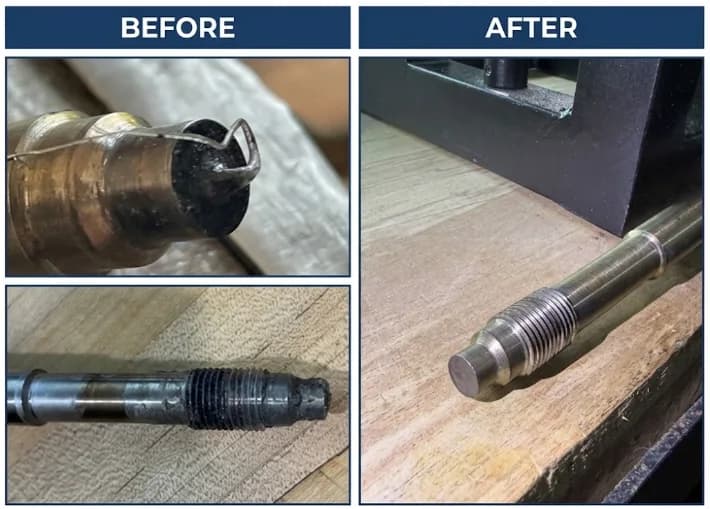
Inspect for material build-up: Check the melt bolt (or sensor port) for polymer residue that can insulate or damage the sensor.
-
Check mounting hardware: Ensure all fittings, compression rings, and thermowells are tight and correctly torqued.
3. Monthly Checks
Purpose: Validate accuracy and extend transducer life.
Actions:
-
Full calibration verification: Compare transducer output against a known reference gauge.
-
Electrical inspection: Look for frayed wires, loose terminals, or corrosion.
-
Thermal stress assessment: Ensure the transducer isn’t exposed to excessive temperature swings beyond its rated range.
-
Check for sensor drift: Document readings to identify trends over time—early drift may indicate sensor aging.
4. Quarterly / Semi-Annual Checks
Purpose: Prevent long-term degradation.
Actions:
-
Remove and inspect melt bolt or pressure tip: Clean or replace if material buildup or wear is evident.
-
Replace seals or O-rings: Even if they appear fine, old seals can leak under high pressure.
-
Functional testing under load: Apply known pressures to verify the transducer responds linearly and consistently.
-
Review data logs: Identify subtle changes in readings that may precede failure.
Additional Preventative Tips
-
Avoid exceeding rated pressure/temperature: Operating beyond specifications accelerates wear.
-
Use proper torque: Over-tightening can damage threads; under-tightening can cause leaks.
-
Document all checks: Maintain a log of readings, inspections, and replacements to track trends.
-
Keep spares: Have at least one calibrated transducer ready to swap in to minimize downtime.
-
Train operators: Quick reporting of abnormal readings prevents bigger failures.
Always consult your process leadership team for official plans. These are shared for thought and to start the conversation.
Make the next step a confident one.
Share your part number or process requirements. We’ll help you work through the fit.
Talk to an expert